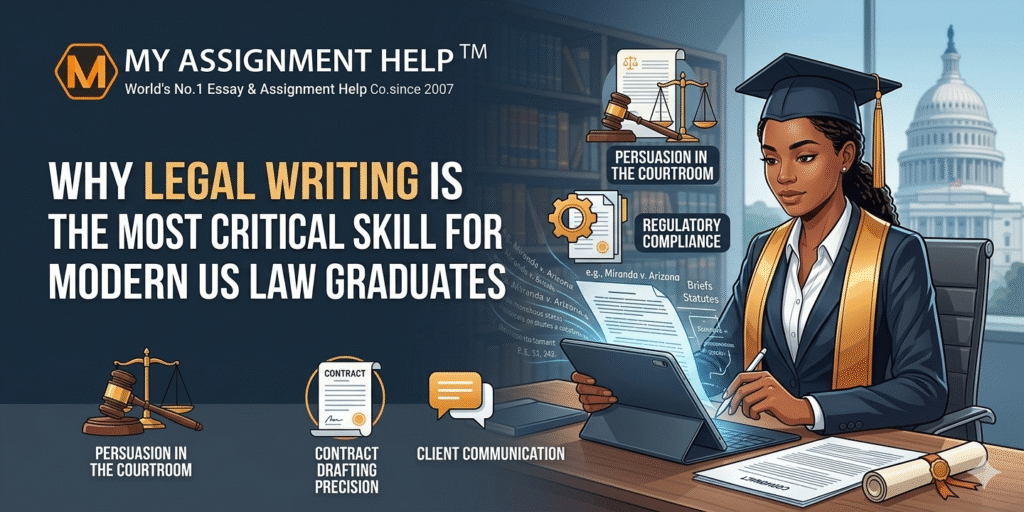
In the high-stakes world of American jurisprudence, many Juris Doctor (JD) candidates enter law school dreaming of dramatic courtroom oratory and “Atticus Finch” moments. However, the reality of modern legal practice is far less about the spoken word and almost entirely about the written one. Whether you are drafting a motion for summary judgment in a federal district court or outlining a complex merger agreement in a corporate office, your career as a US law graduate lives and dies by the quality of your prose.
As the legal landscape becomes increasingly digital and remote, the ability to communicate complex legal theories with brevity and precision has transitioned from a “soft skill” to a non-negotiable professional requirement.
The Shift from Courtroom to Case File
Data from the Administrative Office of the U.S. Courts reveals a telling trend: the vast majority of federal civil cases never reach a jury. Instead, they are resolved through “dispositive motions”—written arguments that persuade a judge to dismiss a case or rule in favor of a party without a trial.
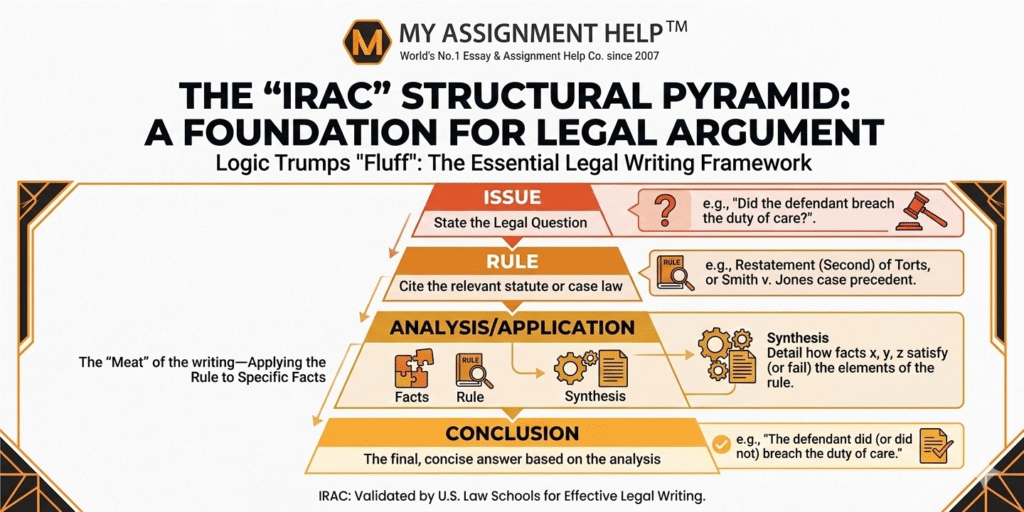
For a fresh graduate, this means your first three to five years in a firm won’t be spent arguing before a judge; they will be spent in front of a monitor. If your writing is cluttered, your logic flawed, or your citations inaccurate, your reputation—and your client’s case—is at risk. This immense pressure is why many students, particularly those balancing the Bar exam prep with final year electives, seek specialized law assignment help to master the Bluebook citation style and IRAC (Issue, Rule, Application, Conclusion) structure before they enter the workforce.
Why Writing Trumps Other Skills in the 2026 Legal Market
1. The “First Impression” Rule
In a competitive job market, your writing sample is often more important than your GPA. A partner at a “Big Law” firm will spend less than sixty seconds scanning your cover letter or a memo snippet. If they find a typo or a convoluted sentence, the application is discarded. In the US, where “notice pleading” standards have evolved into “plausibility” standards (following the Twombly and Iqbal Supreme Court rulings), a lawyer’s ability to tell a persuasive story in a complaint is literally the gatekeeper to the justice system.
2. Clarity as a Cost-Saving Measure
Modern clients, from tech startups in Silicon Valley to Fortune 500 companies, are increasingly sensitive to legal fees. They no longer want to pay for 20-page memos that could have been summarized in three. The “Plain English” movement in US law demands that attorneys strip away archaic “legalese” (like heretofore and aforesaid) in favor of clear, actionable advice. Working with a professional online assignment helper can help students transition from academic fluff to the crisp, professional tone required by modern American firms.
See also: Fire Risk Assessment in the Workplace: A Practical Guide to Employee and Property Safety
3. Precision in the Age of AI
With the rise of Generative AI in the legal sector, the mechanics of drafting are changing, but the strategy of writing is more critical than ever. An AI can draft a standard nondisclosure agreement, but it cannot subtly manipulate the tone of a demand letter to encourage a settlement. Today’s law graduates must be “editors-in-chief” of their own work, ensuring that every word serves a tactical purpose.
Data-Backed Insights: The Cost of Poor Writing
The Legal Writing Institute (LWI) recently conducted a survey of practicing attorneys and judges regarding the skills most lacking in recent graduates. The results were startling:
- 85% of judges cited “lack of conciseness” as the biggest flaw in briefs submitted to their courts.
- 72% of senior partners noted that junior associates struggle with applying facts to the law, often getting lost in abstract theory.
When we look at the Bar Exam, the Multistate Performance Test (MPT) accounts for a significant portion of the score. The MPT isn’t a test of legal knowledge—it’s a test of lawyering skills, specifically the ability to digest a “file” and a “library” to produce a memo or brief under a tight deadline.
Key Takeaways for Law Students
- Master the IRAC/CRAC Structure: Never deviate from a logical organizational framework.
- Kill the Legalese: If a layperson can’t understand your conclusion, it’s not clear enough.
- Obsess Over Citations: In the US, a misplaced period in a Bluebook citation can signal a lack of attention to detail to a judge.
- Draft Early, Edit Often: The best legal writing happens in the third or fourth draft.
- Seek Feedback: Use university writing centers or professional academic services to identify your “blind spots” in logical transitions.
Author Bio: Jonathan Miller, Esq.
Senior Legal Content Strategist at MyAssignmentHelp Jonathan Miller is a licensed attorney with over 15 years of experience in litigation and academic consultancy. Having mentored hundreds of US law students through the rigors of the JD program and the Bar Exam, Jonathan specializes in legal research and writing pedagogy. He currently serves as a lead consultant for MyAssignmentHelp, ensuring that academic support aligns with the highest standards of American legal practice.
Frequently Asked Questions (FAQs)
Q1: Why is IRAC so important in US law schools?
A: IRAC (Issue, Rule, Application, Conclusion) is the gold standard for legal analysis in the United States. It ensures that the writer addresses the specific legal problem, cites the correct authority, and—most importantly—explains how the law applies to the specific facts of the case.
Q2: Can using an online assignment helper improve my career prospects?
A: Absolutely. By reviewing professionally structured papers, students learn how to organize complex thoughts, cite accurately, and adopt a professional tone. It serves as a practical template for the type of work expected in a law firm.
Q3: How has the “Plain English” movement changed legal drafting?
A: It has shifted the focus from “sounding like a lawyer” to “being an effective communicator.” Modern US courts prefer briefs that are easy to read and free of unnecessary jargon, as it saves the court time and reduces the chance of misunderstanding.
Q4: Is legal writing more important than oral advocacy?
A: In terms of daily practice, yes. While oral arguments are high-profile, 90% of a lawyer’s work is written. Many cases are won or lost on the briefs alone before anyone ever steps into a courtroom.
References
- Administrative Office of the U.S. Courts. (2024). Federal Judicial Caseload Statistics.
- Legal Writing Institute (LWI). (2025). Survey on Legal Writing Competency in New Associates.
- Scalia, A., & Garner, B. A. (2008). Making Your Case: The Art of Persuading Judges. Thomson/West.
- The Bluebook: A Uniform System of Citation (21st ed.).